Preliminary Research
December 15, 2025
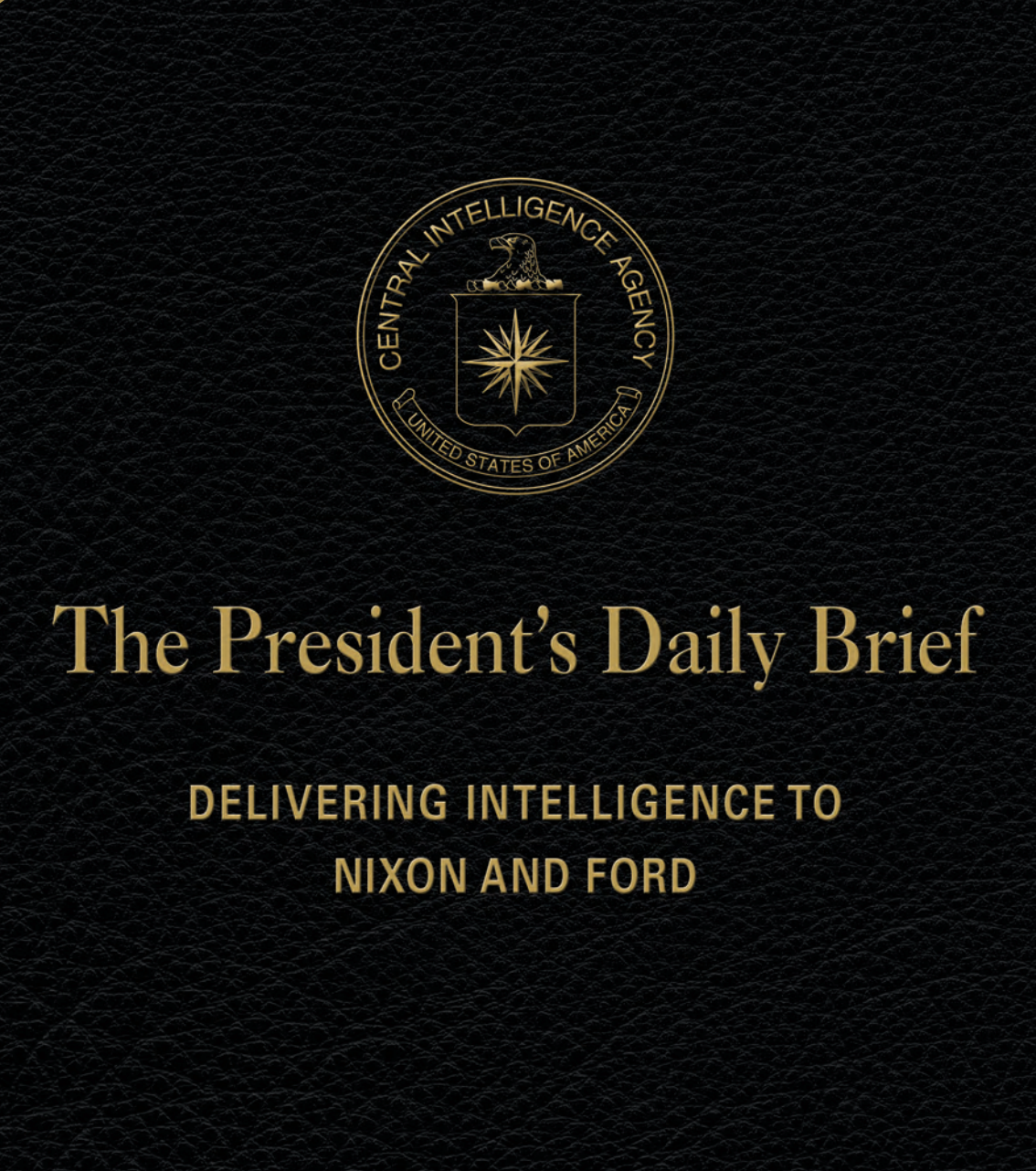
Today I did unstructured research for this project, which I will do tomorrow as well. I mainly looked into a topic that has always been interesting, which is the presidential daily briefing (pdb). I wanted to learn how the person who makes some of the world's most important decision recieves their information, and incorporate it into how the normal person might recieve their information. At first, I was definitely a little skeptical about going into this rabbit hole, seeing that there is not much in common between the common person and the president, but I was wrong and there were for sure a number of great ideas.
The Analyst and Countering Ideas
The first thing I took from the presedential briefings was the role of the live analyst, the representative from the CIA or wherever the information originates that sits with the president while the information is being recieved. One interview I watched mentioned how Trump asked a ton of questions during his daily briefings. Other interviews mentioned how previous presidents would send in questions to the analyst back in the CIA about the origin of some information, etc... In any circumstance, the moral of the story (for me) here was the fact that there is definitely a higher level of interactivity in how important decision makers recieve their information. They do not passively recieve information, they are refining their understanding and questioning their own knowledge. Moreover, having a higher level of interactivity invites opposing ideas. In an interview with David Priess, he mentions how contrary to what might intuitively believe, analyst's on PDB's often provide a large amount of ideas/topics that CONFLICT with the president's political beliefs. This also helps highten the level of interactivity they recieve with their information, and also attacks a common problem in belief formation (which I'll address shortly).
Tailoring to the User and Open Source Strength
Starting with tailoring to the user. In Priess's interview, he mentioned an idea that I ignored at first (because I knew it would be difficult to implement) but he repititvely brought it up, which was the idea of 'tailoring'. Each president recieved information in a different way because they learned in a different way. President Reagan liked to recieve his information on index cards. President Kennedy didn't want to read long reports with bearuacratic language, and instead opted for common-tone and easier reports. President Nixon didn't like to recieve his briefings in the morning, he instead opted to read them at night. In summary, a big idea in how these people recieved their information was that it was tailored to their style of learning. Unrelatedly but for the sake of saving time, there was my original fear that there would be too much clandestine information involved with presidential briefings that exploring such a topic would be useful. To an extend, I was right -- you cannot expect the press to report on information such as North Korean government plans, but I was also wrong. Presidents have described the presidential daily briefing as being 'similiar to the Times', or at times even worse than the times. In addition, while the global press cannot report on secret governments etc..., they can reliably report on major events, like elections and crises, and that might be all that is needed. So I believe something like this can be implemented.
The Structure
Finally, I began to see some key elements of the structure of such a project. I saw that there were sections about Breaking Updates, Deep Dives (Closer analysis), Past and Future Developments, and Summaries. For the sake of my version being briefer, the Deep Dive could be opted out. But regardless, some of these ideas could be incorpoated into the project.
What's Next
Tomorrow, I will do more research on the topic in general. I might find some other avenues besides presidential daily briefings. Off the top of my head, potential avenues could include topics like learning strategies in general, (What makes people absort information better and think critically about it). Maybe I could look more into what intelligence agencies, think tanks, news stations, etc... all do to stay well informed and present objective information. I think I'm going to stay away from the technical solution until at least a few days of exploring the fundamental problem.